
ABS Warning Light Repair: What Causes It?
Need expert ABS warning light repair? Learn what the light means, when it is safe to drive and how diagnostics identify the fault before your MOT is due.
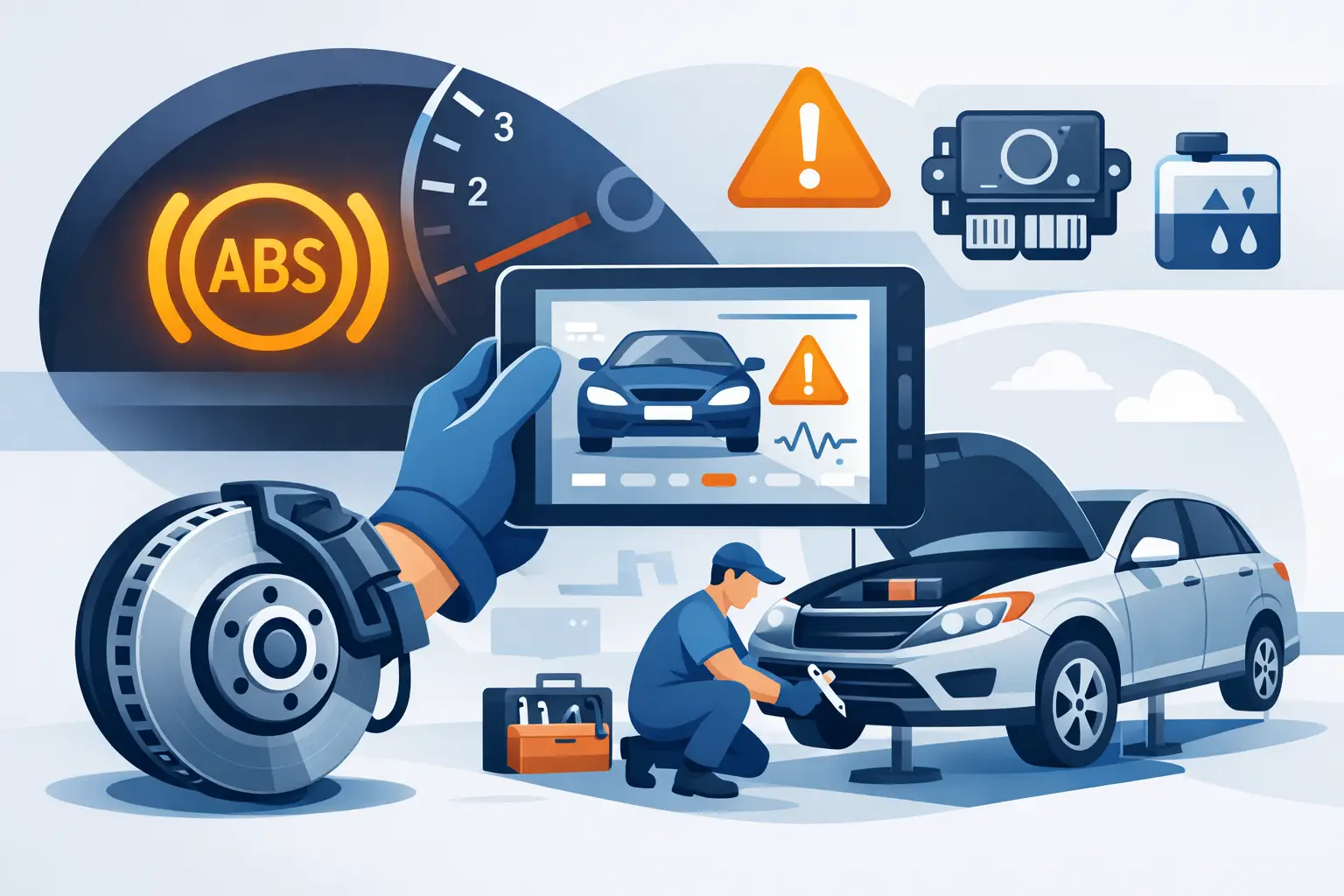
The ABS lamp has come on during the school run or commute, and the car still seems to brake normally. That can make it tempting to put off ABS warning light repair. The trouble is that the warning means a safety system has detected a fault and may not assist you when grip is poor or an emergency stop is needed.
For most drivers, the immediate question is simple: can I still drive? In many cases, conventional braking remains available, but anti-lock braking, traction control and stability control may be disabled until the fault is resolved.
What the ABS warning light means
The ABS (anti-lock braking system) prevents the wheels from locking under heavy braking, allowing the driver to maintain steering control. When the ABS warning light illuminates, the system has detected a fault and has disabled itself as a precaution.
On many vehicles, the ABS light appearing alongside the traction control or stability control warning light indicates that all three systems have been affected, as they share sensors and control units.
Is it safe to drive with the ABS light on?
In most cases, the vehicle can be driven carefully to a garage for diagnosis. Conventional braking — the hydraulic system that applies the brakes — is typically unaffected. However:
- Emergency braking performance is reduced, as the ABS will not intervene to prevent wheel lock
- Traction control and stability control may also be disabled
- The vehicle may fail an MOT with the ABS warning light illuminated
Do not delay diagnosis if the ABS light is accompanied by the brake warning light, if the brake pedal feels different from normal, or if the vehicle pulls to one side under braking.
Common causes of an ABS warning light
Wheel speed sensor fault — the most common cause. Each wheel has a sensor that reports its speed to the ABS control unit. A faulty sensor, damaged wiring or a contaminated sensor ring can trigger the warning.
ABS control unit fault — the module that processes sensor data and controls the ABS pump. Faults can be caused by water ingress, corrosion or electrical failure.
ABS pump or modulator fault — the hydraulic pump that modulates brake pressure during an ABS event. Faults are less common but can be identified through diagnostics.
Low brake fluid — some vehicles illuminate the ABS light when brake fluid is low. Check the reservoir and top up if needed, but also investigate the reason for the low level.
Damaged tone ring — the toothed ring that the wheel speed sensor reads. Damage from kerbing or corrosion can cause an intermittent or permanent fault.
What a diagnostic check involves
A diagnostic scan reads the fault codes stored by the ABS control unit and identifies which sensor, circuit or component has reported a fault. Live data from each wheel speed sensor can be checked to confirm whether the sensor is reading correctly at all speeds.
Precision Vehicle Repair Centre diagnoses and repairs ABS faults for drivers across Edmonton, Enfield and North London. Book a diagnostic appointment or call 020 8807 2111.
Explore Topics
Written by
Precision Vehicle Repair Centre
Content creator and writer sharing insights and stories.


