Is Alloy Wheel Diamond Cutting Worth It?
Learn how alloy wheel diamond cutting restores a precise machined finish, when it suits your wheels, and why careful preparation makes all the difference.
A kerbed alloy can make an otherwise well-kept car look tired, particularly when the wheel has a bright, machined face. Alloy wheel diamond cutting is the specialist refurbishment process used to restore that distinctive finish, but it is not the right repair for every wheel or every type of damage. The best result starts with an honest assessment of the wheel's condition, not a quick cosmetic promise.
What is alloy wheel diamond cutting?
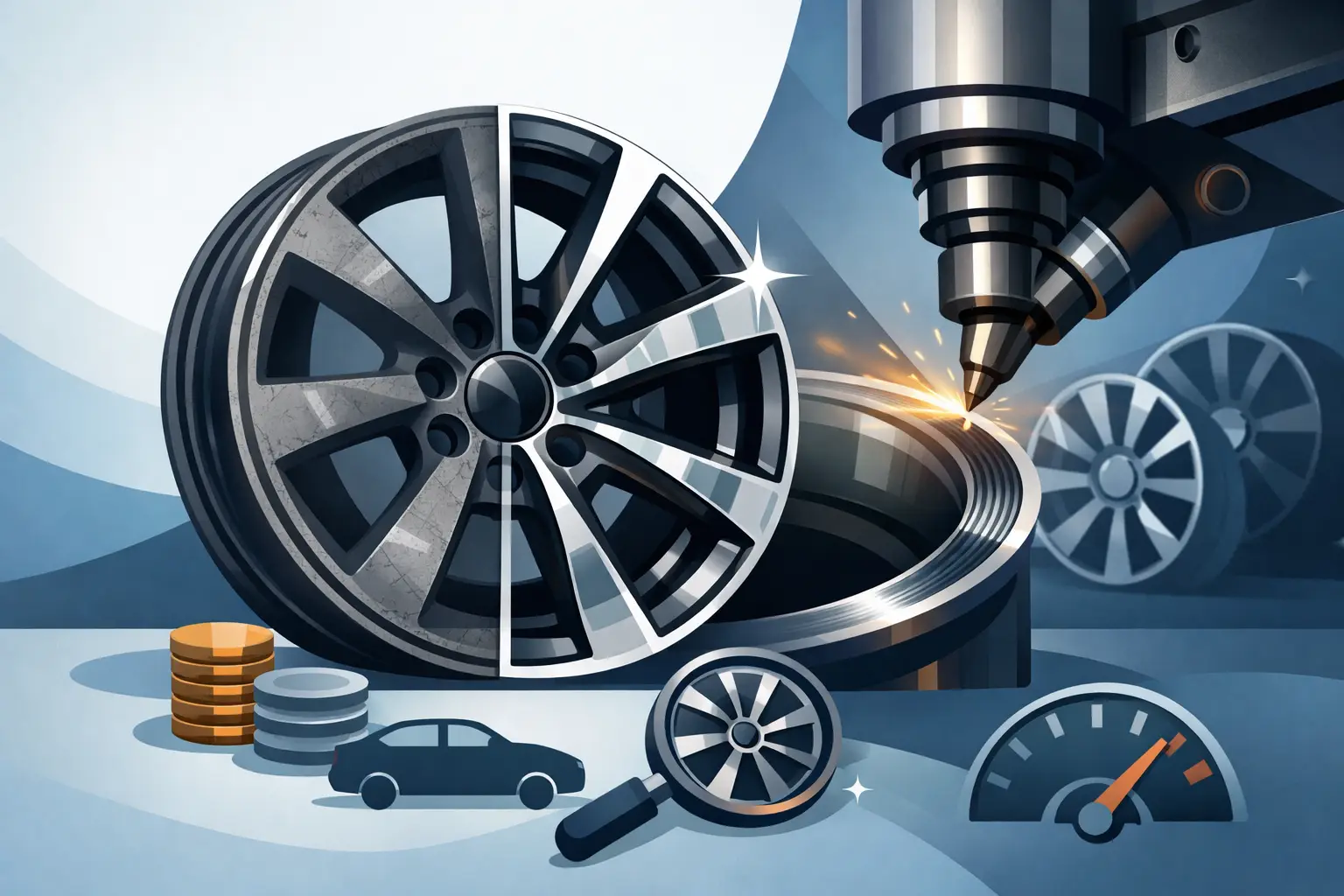
Diamond-cut alloys have a two-tone appearance: a bright, machined face created by a lathe cutting away the outer layer of the alloy, combined with a painted or powder-coated background. The contrast between the machined surface and the darker recesses gives the wheel its characteristic look.
Diamond cutting uses a CNC lathe to remove a very thin layer of the alloy face, creating a fresh, precise surface. The wheel is then lacquered to protect the machined finish.
When diamond cutting is appropriate
Diamond cutting is suitable when:
- The wheel has kerb damage that has not penetrated deeply into the alloy
- The existing machined face is scratched, oxidised or has lost its clarity
- The wheel structure is sound — no cracks, significant bends or deep gouges
It is not appropriate when:
- The wheel has been diamond cut multiple times before — each pass removes material, and there is a limit to how many times a wheel can be safely machined
- The damage is too deep for the lathe to remove without compromising the wheel's structural integrity
- The wheel has cracks or stress fractures — these require specialist repair or replacement, not cosmetic refurbishment
What the process involves
The wheel is removed from the vehicle, cleaned and inspected. Any minor damage that can be addressed before machining is repaired. The wheel is then mounted on the CNC lathe, which removes a precise, uniform layer from the face. After machining, the wheel is cleaned, inspected again and lacquered.
The quality of the result depends on the condition of the wheel before machining, the precision of the lathe setup and the quality of the lacquer applied. A rushed process or poor lacquer application will result in a finish that deteriorates quickly.
Powder coating as an alternative
For wheels that are not diamond cut, or where the damage is too significant for machining, powder coating provides a durable, even finish in a wide range of colours. Powder coating is more resistant to chipping and corrosion than conventional paint and is a good option for wheels that need a complete refurbishment rather than a machined face restoration.
Precision Vehicle Repair Centre carries out alloy wheel diamond cutting and powder coating for drivers across Edmonton, Enfield and North London. Request a quote or call 020 8807 2111 to discuss your wheels.
Explore Topics
Written by
Precision Vehicle Repair Centre
Content creator and writer sharing insights and stories.


