Engine Warning Light Diagnostics Explained
Engine warning light diagnostics identify the real fault behind the dashboard alert, helping North London drivers choose the right repair with confidence.
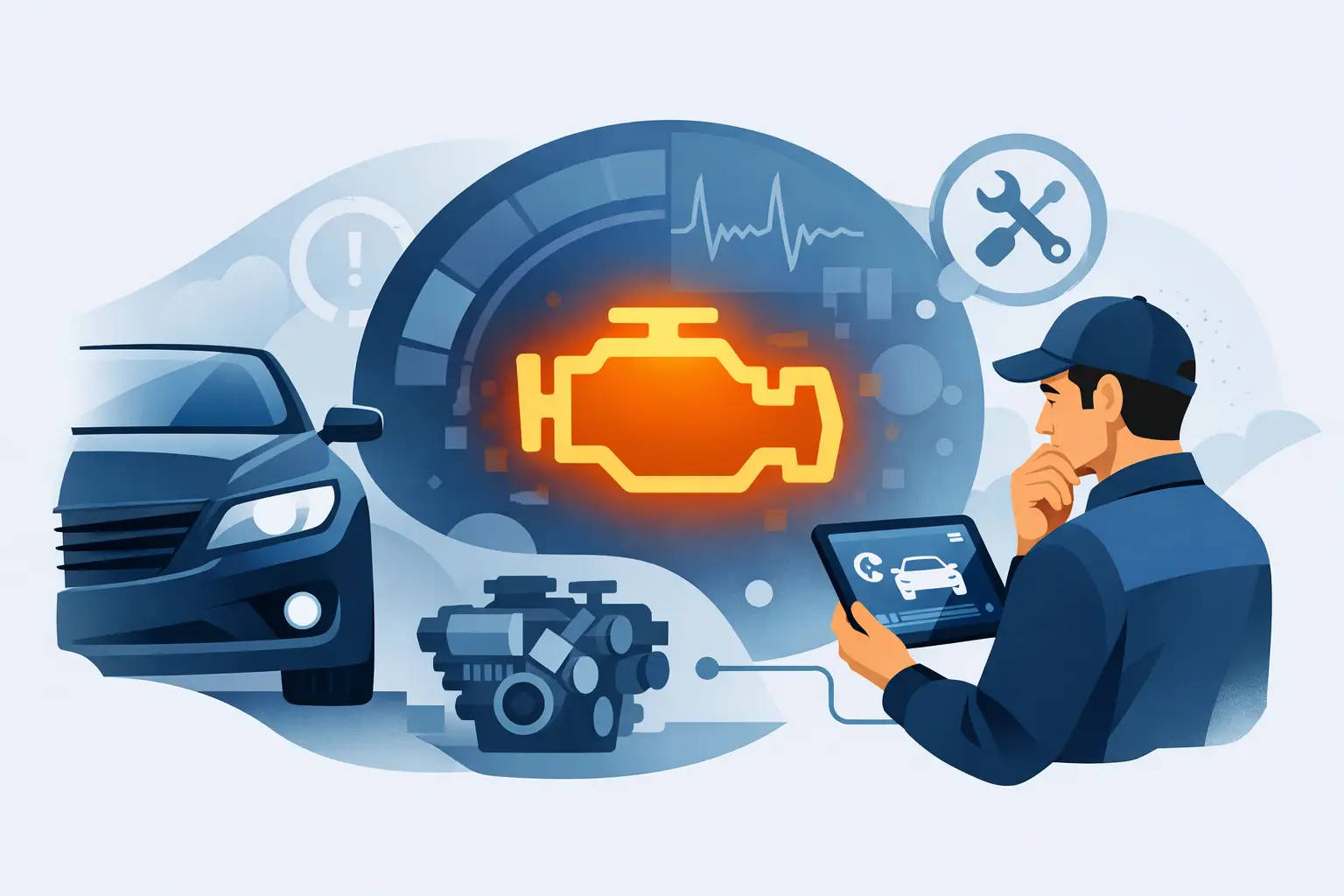
That small amber engine symbol can mean anything from a loose fuel cap to a fault affecting emissions, performance or reliability. Proper engine warning light diagnostics are about finding the cause behind the alert, rather than replacing parts based on a guess. For drivers who depend on their car for commuting, school runs and everyday journeys around North London, that difference can save time, money and unnecessary worry.
An engine warning light does not always mean the engine is in immediate danger. But it does mean the vehicle has detected something outside its normal operating parameters, and that is worth understanding properly.
What triggers the engine warning light
The engine management system monitors dozens of sensors across the engine, fuel system, exhaust and emissions equipment. When a sensor reading falls outside the expected range, the system stores a fault code and illuminates the warning light.
Common triggers include:
- Oxygen sensor fault — affects fuel mixture and emissions
- Mass airflow sensor fault — affects fuel delivery and performance
- Throttle position sensor fault — affects acceleration response
- Catalytic converter efficiency fault — often caused by a failing oxygen sensor or fuel system issue
- Evaporative emission system fault — often triggered by a loose or damaged fuel cap
- Misfire detection — one or more cylinders not firing correctly
- EGR valve fault — affects emissions and can cause rough running
- Injector fault — affects fuel delivery and combustion
What a diagnostic scan reveals
A diagnostic scan reads the fault codes stored by the engine control unit. Each code identifies the system and the type of fault detected. The technician uses this information alongside live sensor data to identify the root cause.
A fault code is not a repair instruction. A code for an oxygen sensor fault, for example, may be caused by the sensor itself, a wiring fault, an exhaust leak upstream of the sensor, or a fuelling problem that is causing the sensor to read incorrectly. Replacing the sensor without investigating further may clear the code temporarily but will not resolve the underlying issue.
When to act on an engine warning light
Act promptly if:
- The light is flashing rather than steady — this often indicates a misfire that can damage the catalytic converter
- The light appears alongside other warnings — oil pressure, temperature or battery
- The vehicle is running noticeably differently — rough idle, hesitation, reduced power
Monitor and book soon if:
- The light is steady and the vehicle seems to drive normally
- The light appeared after refuelling — check the fuel cap is fully closed
Do not ignore it if:
- The light has been on for more than a few days
- The light cleared itself but has returned
Precision Vehicle Repair Centre carries out engine warning light diagnostics for all makes and models across Edmonton, Enfield and North London. Book a diagnostic appointment or call 020 8807 2111.
Explore Topics
Written by
Precision Vehicle Repair Centre
Content creator and writer sharing insights and stories.


